Material characterisationMechanochemical processingConnected software
01The mission
Zero Mining. Full Circularity.
The materials for our next generation of batteries are already in circulation.
Our ambition is to keep their value there. Phoenix Labs is engineering an approach to recovered battery materials that connects material understanding, processing and software.
Building that capability in Britain means working towards a domestic source of critical materials — and a more circular industrial future.
Our focus
From battery-derived materials to the foundations of future supply.
02Engineering systems
Different materials. A more informed process.
Battery-derived materials vary from batch to batch. Our engineering brings material characterisation and mechanochemical processing into the same conversation.
Material perspective
Inside a lithium-ion battery.
NMC cell → material components
Illustrative NMC lithium-ion material cycle. Not a simulation of PV-001 or PL-001 performance.
PV-001Material characterisation
Start with the batch.
PV-001 is designed for inline batch characterisation: capturing a material fingerprint to help identify differences between feedstocks and inform processing decisions.
Design focus
Connect what we know about a material with how we approach its processing.
PL-001Mechanochemical processing
Unlock the material’s potential.
PL-001 is designed to use mechanical forces to change the structure of battery-derived materials, helping make valuable metals more accessible for subsequent recovery.
Design focus
Relate processing conditions to material behaviour and analytical results.
03PhoenixOS
The brain of the refinery.
Better recovery starts with better decisions.
PhoenixOS is our in-house refinery intelligence and management system. It is designed to use machine learning to turn material and process data into decisions that improve metal recovery while reducing energy use, chemical consumption and unnecessary processing.
Intelligence in the process
Process data
Materials · Conditions · Results
PhoenixOS
Learn. Predict. Refine.
Informed decisions
Recovery · Resources · Efficiency
Feedback
Measured outcomes feed back into the next decision.
01 / Understand
Learn how materials behave.
Machine-learning models are trained to identify relationships between feedstock characteristics, processing conditions and recovery outcomes — building a more useful picture of what drives performance.
02 / Anticipate
Compare before committing.
Predictive modelling explores how changes in process settings could affect recovery and resource use, helping identify promising conditions before physical trials.
03 / Improve
Turn results into better decisions.
The system is designed to use measured results to refine its models, flag unexpected behaviour and guide process adjustments, with operators retaining oversight.
The efficiency objective
Recover more value. Use fewer resources.
Metal recovery / Energy / Chemicals / Processing time
Current model training uses sample data and simulation, with physical trials needed to validate performance.
04Industrial direction
Refining the focus. Expanding the possibility.
Domestic refining is the focus. A circular materials industry is the ambition.
Our systems work sits within a wider direction: recovering value from battery-derived materials and connecting it to future manufacturing.
Refine
The present focus: engineering the understanding and processes that can support domestic refining.
Recycle
The wider opportunity: connecting end-of-life batteries with material recovery pathways.
Re-build
The long-term ambition: returning recovered materials to battery manufacturing, including cathode active materials.
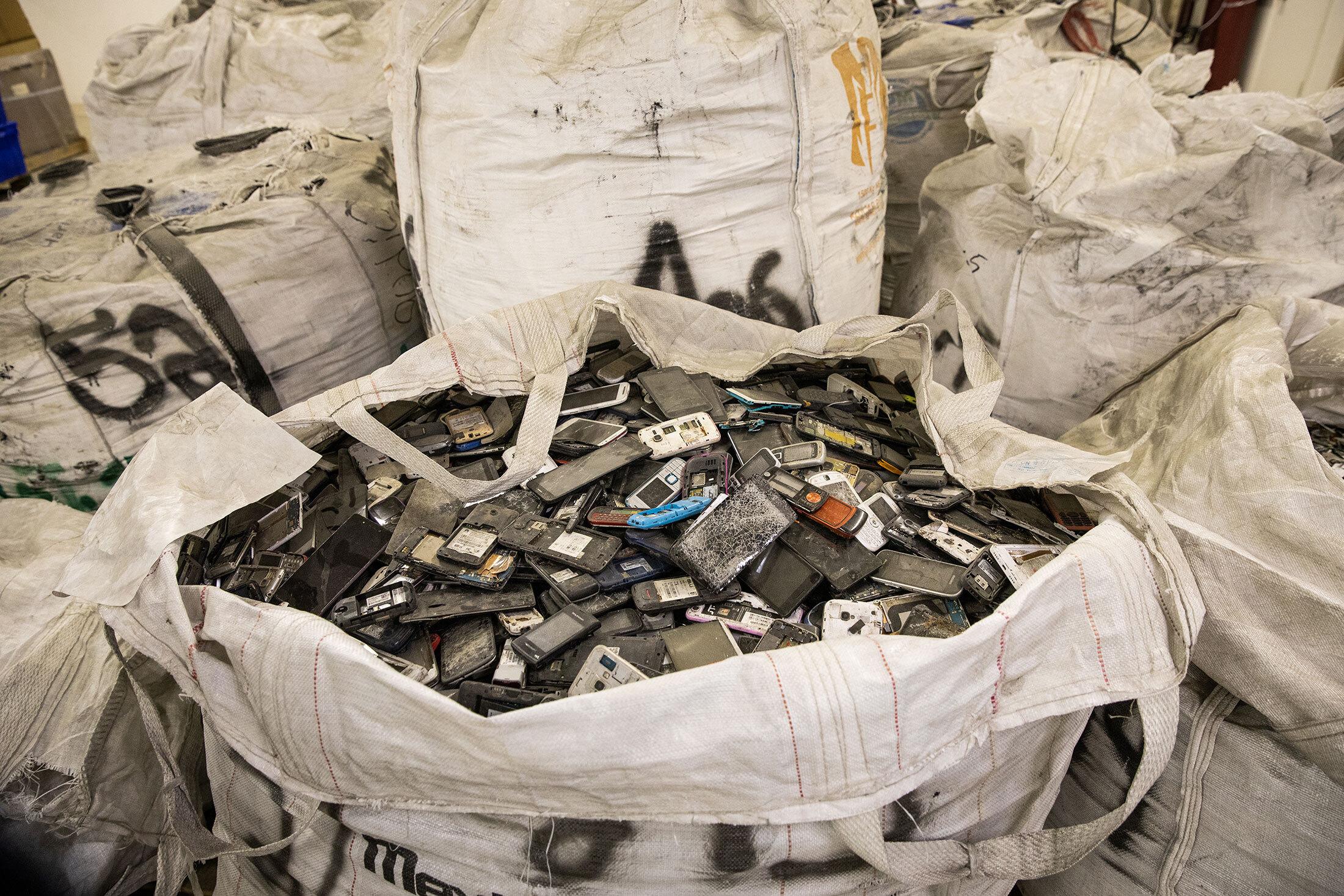
End-of-life electronics / The opportunity for material recovery
Get Involved
Powering the EV Revolution with Zero Mining.
Whether you're a recycler, manufacturer, battery owner, investor or circular economy partner, Phoenix Labs would like to hear from you.